

Why Does a Ballet Artist Need Geography? Interview with the 10,000th Venue of the Geographical Dictation
21.11.2026
Geography and ballet are far closer than they might seem at first glance. On stage, one can travel across countries and eras, discover the traditions of different peoples, and open up distant corners of the world. At the Vaganova Ballet Academy they know this from experience. For several years its students have taken part in the Geographical Dictation, and on 22 November they will write it for the first time within the walls of their own Academy, which has become the 10,000th registered venue of the event. On the eve of the occasion we spoke with Maria Yuryevna Gendova, Candidate of Art History and teacher-organiser at the Academy, about why future artists need geography, what journeys lie hidden in well-known ballets, and how wide the geography of the St Petersburg ballet school itself really is.
How did the idea of joining the Geographical Dictation and holding it at the Academy come about?
The idea of holding the event within the Academy’s walls had been in the air for a long time. For several years an initiative group of students in the senior and final-year classes has been taking part in this educational project.
It is an opportunity to discover one’s own country, to choose destinations for future travels, and to foster a personal sense of responsibility for its fate. Some of the students later joined volunteer projects. In short, such participation helps one feel a connection with one’s native places.
This year is special for us. For the first time the Vaganova Ballet Academy will act as an independent venue for the event. It will be a closed venue, which allows us to meet security requirements and the tight schedule of the students, who have rehearsals, performances and academic activities.
This year’s participants will, as usual, be our “almost artists”. Pupils from grades 5–9 who are preparing to sit geography as a final examination will also join in.
We will also be glad to see the teachers-mentors and educators of our boarding school taking part as participants.
img_20261118_154618_edit_1560161630750685.jpg
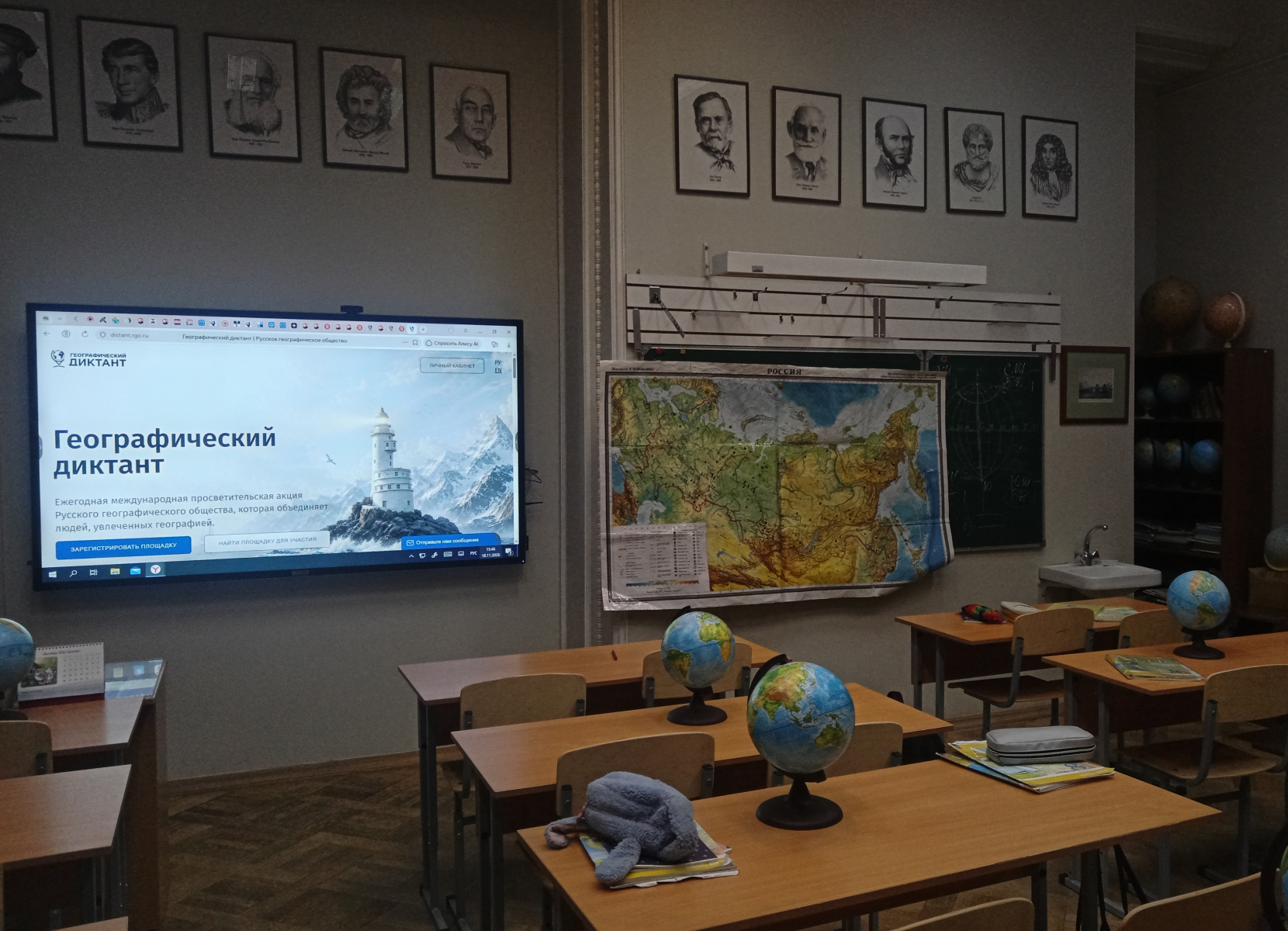
The Vaganova Academy of Russian Ballet has been taking part in the Geographical Dictation for several years. Photo: Marya Gendova
Why is it important for a future ballet artist to know geography? How does this knowledge help on stage?
A team of like-minded people has gathered here, passionate not only about the ballet profession but also about the physical and economic geography of the country. They study the history and culture of their native places and take an interest in the ethnographic features of the different peoples of Russia.
This knowledge is important for a ballet artist — a dancer who speaks through his or her own artistic and expressive language: dance. By nature the dancer is, as it were, “mute”, yet needs no interpreters. He or she addresses the feelings of the audience directly.
In a performance the ballet artist recreates the character of a personage and reveals the story of that person’s life. That life is linked to a particular epoch and “tied” to a specific place. Here one needs history, literature, and an understanding of how people live in different corners of the world.
Soviet-era ballets, for example, covered a wide palette of themes: spiritual and moral conflicts, historical plots, appeals to national epic, the theme of the conquest of space, or issues of man-made disasters. Recalling the latter, I would mention two ballets — Angara and The Caspian Ballad.
photo_2026-11-20_12.05.30.jpeg
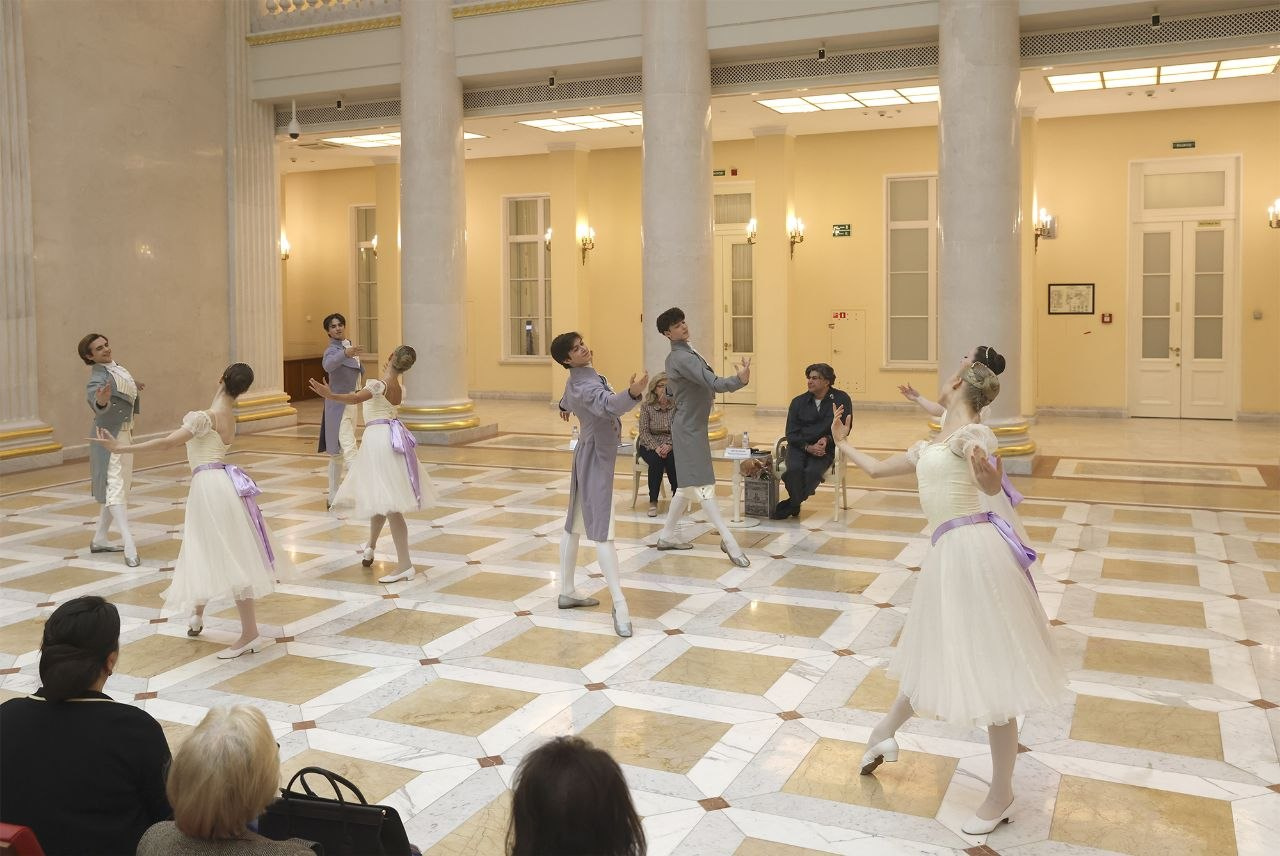
“The idea of holding the Geography Dictation at the Academy had been in the air for a long time.” Photo: Nikita Vorobyov
In the history of ballet there are many works whose action unfolds in different countries and corners of the world. Can one say that ballet, in its own way, introduces audiences to different countries, cultures and the traditions of peoples? Which productions from the Academy’s repertoire could become a kind of journey?
Among the Academy’s training performances there are two ballets that allow both the young artists and the audience to travel “around the world”.
One is The Fairy Doll, revived in 2015 by the Academy’s rector, People’s Artist of Russia N. M. Tsiskaridze, for our students. The action takes place in a doll shop in St Petersburg’s Gostiny Dvor. At night its inhabitants come to life — dolls representing the most diverse peoples.
And in the Christmas and New Year ballet The Nutcracker, in the final act, the Nutcracker-Prince leads Marie (Masha the Princess) to Confiturembourg — the magical kingdom of sweets. In the version by choreographer V. Vainonen they are met by guests from Spain (chocolate), the Arab countries (coffee) and China (tea). And how could one do without the Russian dance — the trepak!
This choreographic idea — sweets in the guise of different nationalities in The Nutcracker — is no accident. Before the Revolution in Tsarist Russia the Christmas tree was decorated with edible treats. So the guests who greet Masha and the Prince are not only living toys but also a kind of hint by the choreographer at the presents and the centres of their origin. They were given to relatives. There was a tradition of “eating the tree” — that is, taking one of the treats from the Christmas beauty as a gift.
In June 2025, at the graduation performances, thanks to the work of N. M. Tsiskaridze and the teacher-mentors, a fragment from the Soviet ballet Gayane was restored. It contains a great deal of ethnographic material — in the dance vocabulary, the costumes and the décor.
Thus our children undertake ethnographic and choreographic “expeditions” both in the lessons of character dance traditional for ballet schools and within the space of the performances themselves.
mumina_zoya_balet_37658.jpeg
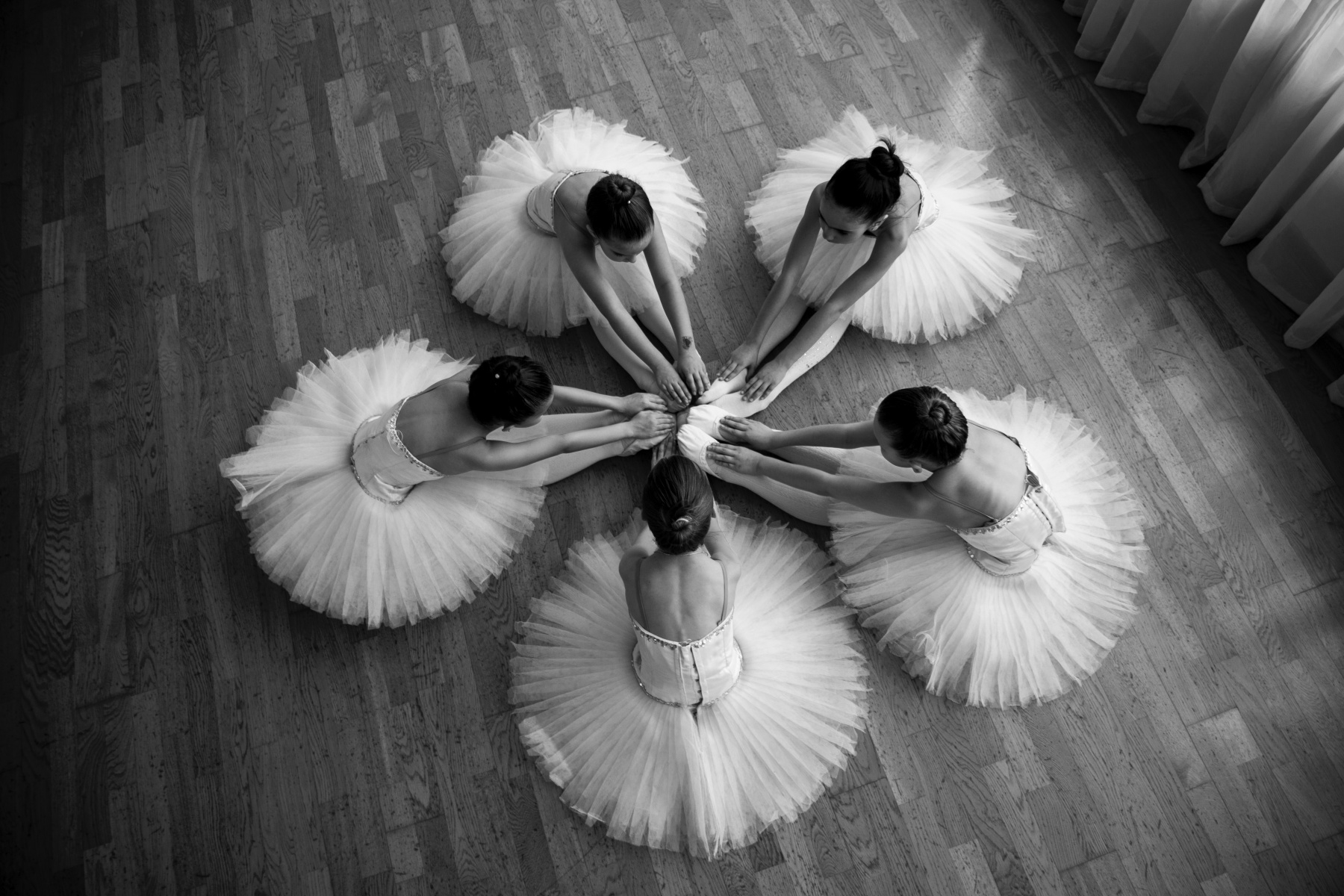
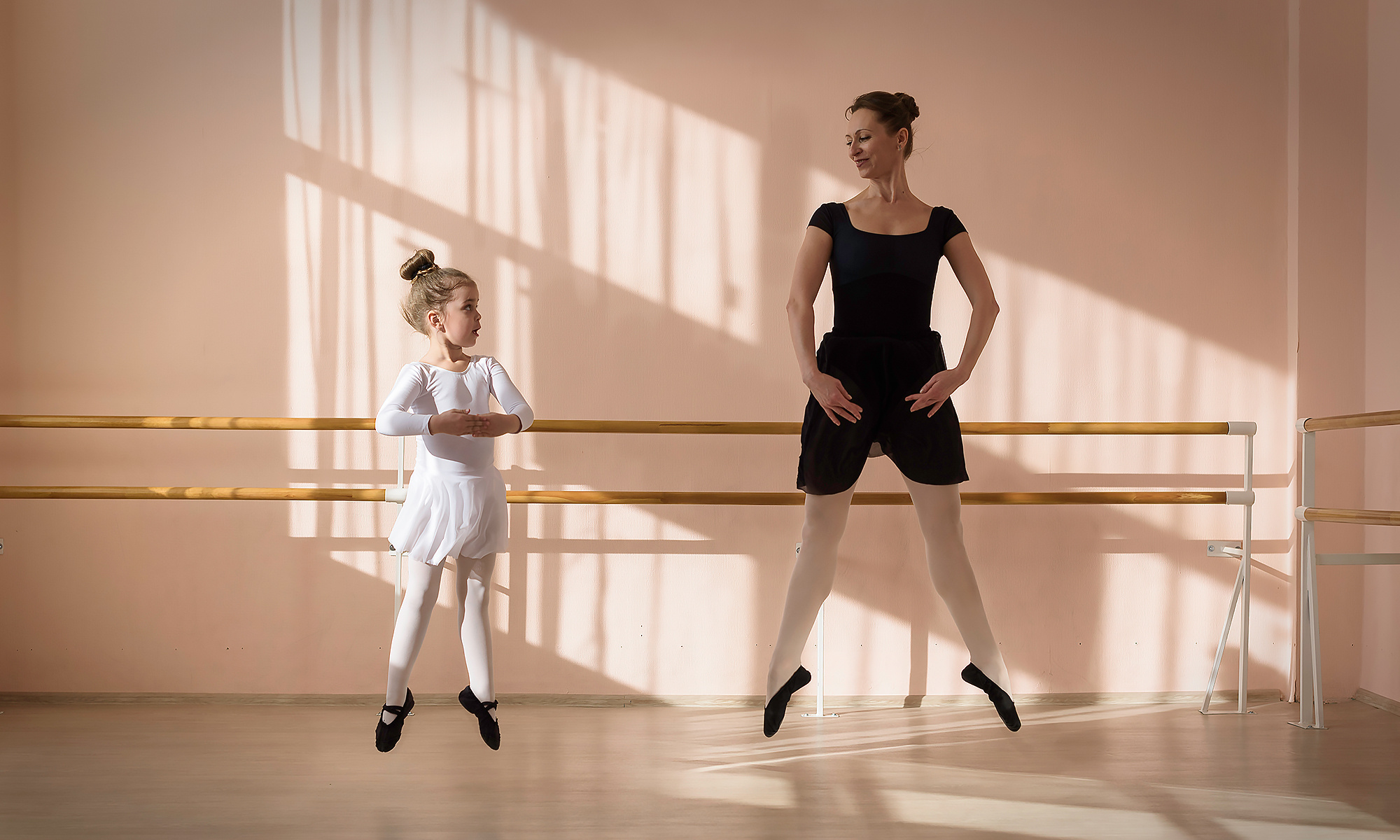
Ballet brings dancers together in a unified choreography. Photo: Zoya Mumina.
The Academy traces its history back to 1738, and its graduates have made Russian ballet famous far beyond the country’s borders. If one were to imagine a geographical map of Russian ballet, which cities and countries would occupy a special place on it? Where is the influence of the St Petersburg ballet school most noticeable today?
Our graduates dance all over Russia — from Kaliningrad to Vladivostok. Many work in the ballet theatres of the Volga region and the Urals. Quite a few of our students serve in the Novosibirsk Theatre.
Our graduate Alexander Omar now directs the ballet company of NOVAT. It is called the Theatre of Victory — it opened in May 1945.
At the same time I will not hide the fact that every pupil of the Academy dreams of performing in Moscow and St Petersburg. And among our graduates there are many who manage to join the companies of the Bolshoi, the Mariinsky, the Mikhailovsky, as well as the Stanislavsky and Nemirovich-Danchenko Moscow Music Theatre (MAMT). Incidentally, the chief choreographer and head of the ballet company of MAMT is also a representative of our school.
Students come to the Academy from different regions of Russia and from abroad. Where do your pupils come from? Are there representatives of particularly remote corners of the world among them?
The phrase “unity in diversity” is appropriate here. It is hard to find a region on the map of Russia from which students have not come to us.
Today we have pupils from the new territories and from the Far East — from Blagoveshchensk and Khabarovsk. Eastern and Western Siberia are represented by students from Irkutsk, Barnaul, Abakan, Tomsk and Novosibirsk.
Central Russia and the Urals are widely represented. There are students from Rostov and Saratov Regions, Vladikavkaz and Belgorod Region. From the European North they come from the Komi Republic and Vologda. Students also come to us from Belarus.
They come from Mongolia, China, Japan, Argentina, Colombia and Australia. We have also had, and still have, young dancers from Europe and the USA. Among the pupils there have been representatives of New Zealand and South Africa.
astahova_mariya_quotsinhronquot_165160.jpg
From first lessons to a career. Photo: Maria Astakhova.
Ballet is an art that unites people of different cultures and nationalities. How does cultural diversity manifest itself in the everyday life of the Academy? Do the students introduce one another to the traditions of their native regions and countries?
Perhaps the main place for communication, getting to know one another’s traditions and for friendship is the Academy’s boarding school. The holidays that take place within its walls are especially helpful in this. For a couple of years the students have been taking part in the “Great Ethnographic Dictation” project. The project “We Are Different, but We Are Together” is currently under development.
Among the forthcoming events is “A Non-Lesson in Geography: National Plots on the Ballet Stage — Unity in Diversity”.
For five years now the Academy has been producing its own educational radio project “Musical Break”. Every day students from Russia and other countries learn about figures in Russian art, science and history, and about the country’s projects and institutions. In autumn 2025 we ran a series marking the 180th anniversary of the Russian Geographical Society, and there were broadcasts about lighthouses. This week we are talking about the Imperial Academy of Arts and the Peredvizhniki (Wanderers) society. Each week has its own theme. The broadcast ends with a fragment of a work by a Russian or foreign classical composer.
Our priority is the Russian cultural code, yet we strive to form a broad outlook. That is why we also introduce the students to world classical music. We regard this project as part of the Academy’s internal cultural policy, which unites people of different cultures.
In December a charity Christmas fair will open. Here, in creative work — handicrafts, cookery (don’t be surprised!), watercolour painting, beadwork or the making of greeting cards — an ethnic kaleidoscope appears. In their works the students draw on the ethno-cultural baggage with which they arrive to study with us. All the proceeds go to one of the children’s funds. Thus getting to know the culture of one’s “neighbour” also becomes an opportunity to help others.
vyatkin_vladimir_malenkie-baleriny_415289.jpg

Young ballerinas prepare for a performance. Photo: Vladimir Vyatkin.
What would you wish the participants of the event who on 22 November will test how well they know our country?
That is a difficult question. I think we would wish the participants never to lose their sensitivity and the spark of inquisitive curiosity. These things push us towards reflection, good deeds and discoveries — large or small, geographical or spiritual. Each person chooses for himself or herself. The main thing is to be able to dream, to dare and to think while looking at the horizon! Good luck!
The project is implemented with the support of the Presidential Grants Fund.
