

Cold-Weather Pens and Writing Boards: How the Geographical Dictation Is Being Prepared at the Site of the Urengoy Field Discovery
18.11.2026
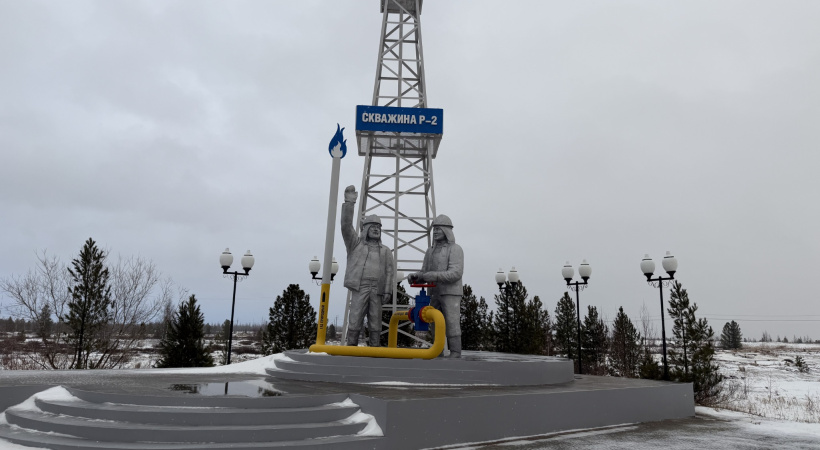
On November 22, the Geographical Dictation will be held for the first time at Well R-2 near Novy Urengoy. Preparations are already underway for an outdoor event at the memorial to the pioneers who discovered the Urengoy field. Instead of tables, participants will use portable writing boards, and hot tea from thermoses will be available to keep everyone warm.
Chairs will be set up beside the memorial. Participants will receive pens designed to write in freezing temperatures, and the organizers have prepared a tent in case of strong winds or heavy snow. Site organizer Ekaterina Menshchikova plans to invite employees of Gazprom Dobycha Urengoy to the event. For some of them, it will be their first visit to the well that marked the beginning of the field’s history.
Today, a road sign marks the turnoff to R-2. In the mid-1960s, everything required for drilling still had to be delivered to the site on the Yengayakha River. The location was chosen based on seismic survey results, which helped geophysicists determine the structure of the rock formations at a depth of roughly one kilometer and identify where to look for gas.
road-sign-close-up.jpeg
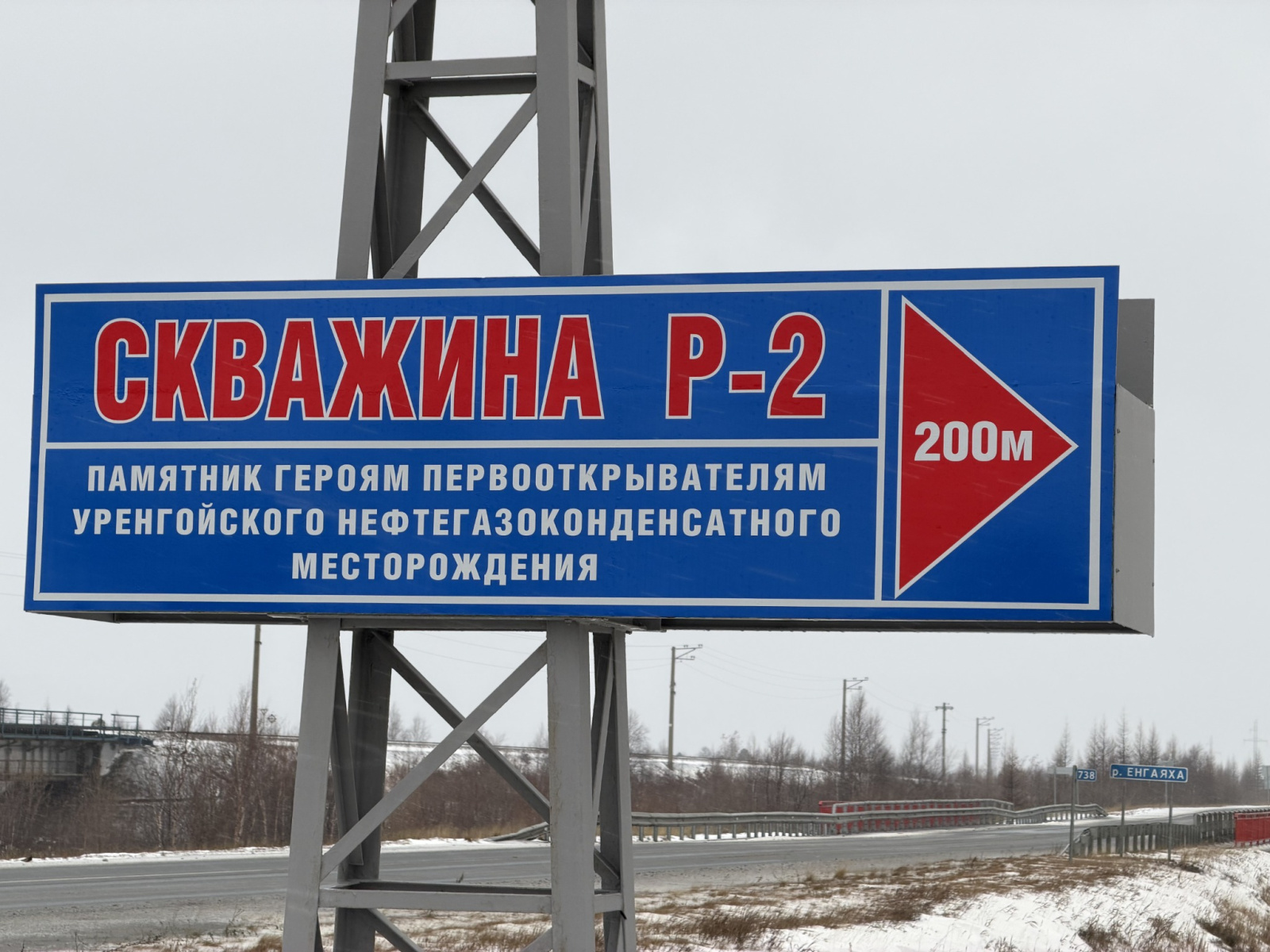
Signpost to the memorial by the Yengayakha River. Photo: Ekaterina Menshchikova.
The 150-ton drilling rig was transported to the Yengayakha in sections. On the final leg of the journey, the equipment was carried by Mi-6 helicopters. On June 6, 1966, Well R-2 produced a powerful gas inflow, confirming the discovery of the Urengoy field.
A few years later, the gas workers’ settlement of Yagelny sprang up near the field and eventually grew into the city of Novy Urengoy. Well R-2 had its own subsequent history: after the exploration phase, it was converted into an observation well so specialists could monitor the condition of the reservoir. Today, the wellhead equipment is still visible behind the fence at the memorial. Next to a model of the derrick stand two statues of gas workers — one with his hand raised, ready to give a command, the other gripping the handwheel of a valve. It is at this monument that participants will write the Geographical Dictation for the first time.
well-equipment.jpeg
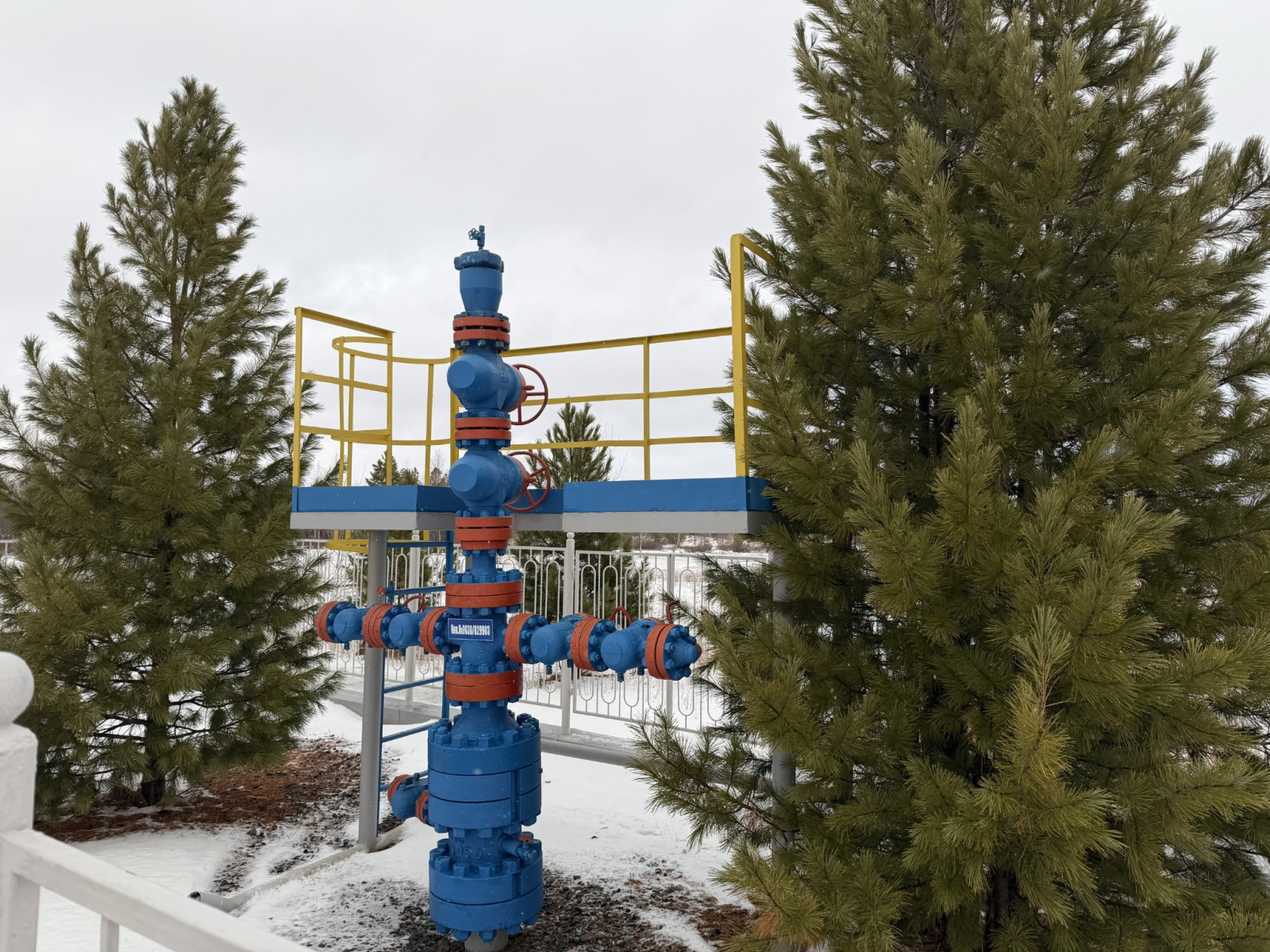
Equipment at the wellhead of borehole R-2. Photo: Ekaterina Menshchikova.
Menshchikova chose the site so that participants could see the well they may previously have only read about. “When you’re actually standing there, history stops being just words on a page. You begin to feel it,” she says.
A member of the Novy Urengoy branch of the Russian Geographical Society hopes that after the Dictation, participants will continue the conversation at home — asking relatives how they came to the North and what they remember about the construction of Novy Urengoy.
R-2 is one of several new venues on the event map this year. In the Kaliningrad region, the Dictation will be held at the historical and landscape center “Old Lighthouse” in Zalivino; in St. Petersburg, participants will be hosted by the Oceanarium; and in Australia, an Orthodox women’s monastery in Sydney will take part. Venue registration is still open. Applications should be submitted through the organizer’s personal account by November 20 and sent for confirmation.
The in-person Dictation begins on November 22 at 12:00 local time. Choose a venue in the “Geography of the Dictation” section and come to answer questions about the geography of Russia.
The project is implemented with the support of the Presidential Grants Fund.
